
published November 10, 2026

A quick announcement: If you’re looking for a tool to help establish a daily nature ritual, the Nature Journal is meant for exactly that. I hope you enjoy it!
What is the most brilliant autumn color in your neighborhood at the moment? (Assuming it’s autumn where you are.)
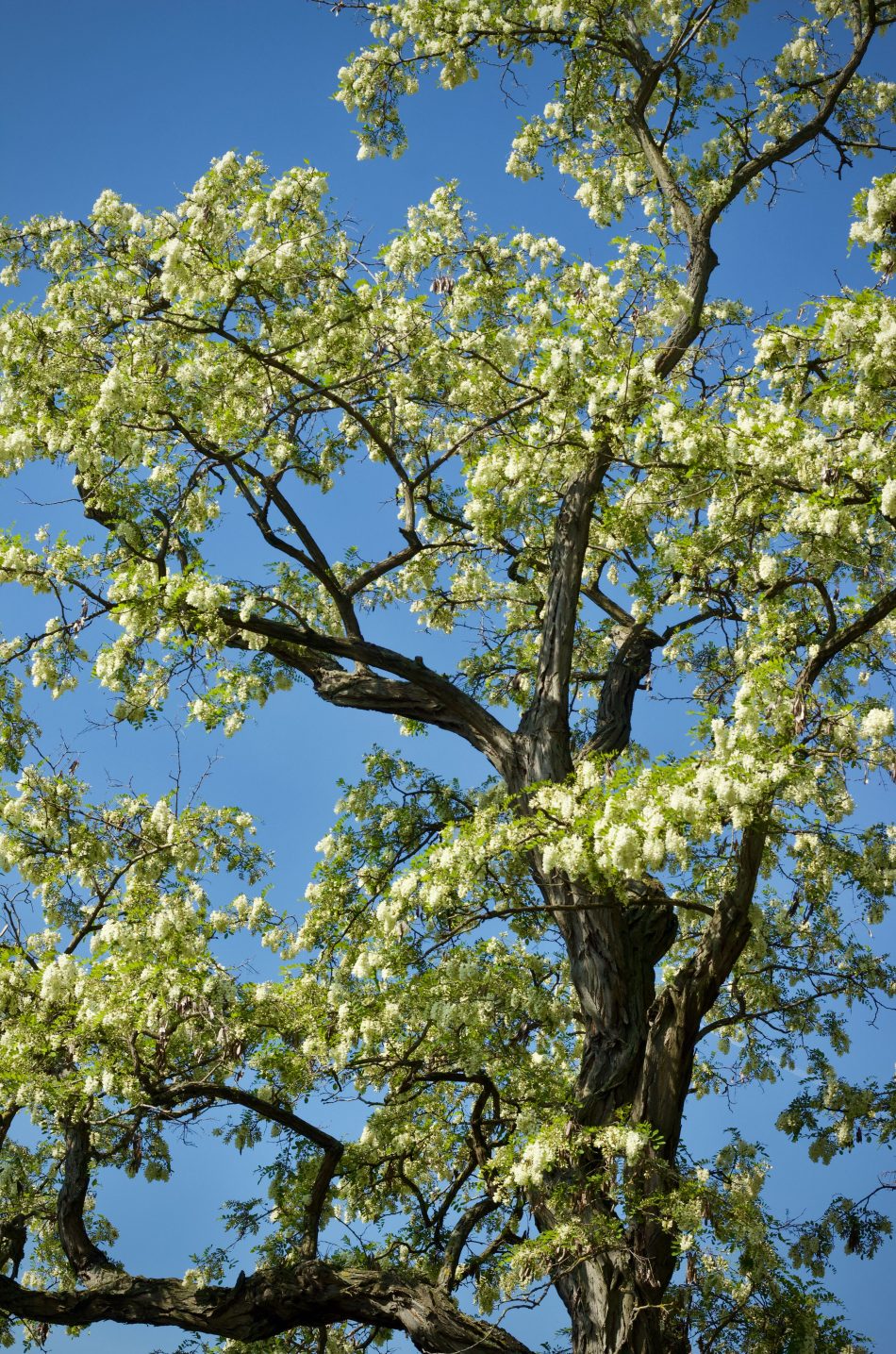
I have a soft spot for the red leaves, but there are some gorgeous yellow ones, too, and one of the best may just be yellowwood.
Yeah, I hear a bunch of you saying, “What’s yellowwood? Never heard of it.”
And it won’t help to mention the scientific name, either. I can’t imagine there’s ever been a time when someone said, “Sure, you know it. Cladrastis kentukea,” and the person faced-palmed, because of course they knew it by THAT name. 🙂
To those who do know and love the tree, join me in a rousing shout of: Get to know yellowwood!
Because if you know it, I am assuming you love it. For its resilience and willingness to bloom even if no one sees it, if not for its beauty.
For those who don’t know it already, it just may be one of the most beautiful trees you’ve never met. Let’s fix that.
(If you’re interested in how a French farmer discovered the yellowwood tree in Tennessee, check out this week’s episode.)

In some ways, those fabulous colors we see on the trees are a celebration of the transition into the dark part of the year, and by offering us that celebration, they also soften the transition.
It’s common in our culture to see light and dark as a value judgment. Light is good, and dark is bad. But outside of children’s books and old western movies, that’s not really the case.
Imagine being stuck in a never-ending day. No sunrise to enjoy before starting activity. No twilight to help us wind down. No night to rest and recuperate from the day.
It wouldn’t be a miraculous liberation from the boogeymen who haunt the dark. It would be a nightmarish slog through a brightly illuminated industrial hell.
All of the same fears and demons would still be there, just like they are in the daylight. We’d just have to face them without the benefit of rest and reflection.
Let’s step that up in scope. Just like we profit from the transition from light to dark to light again in the cycle of the day, we can benefit from it in the cycle of the year, too.
Hear me out. The autumn colors are a bit like the sunset of the year’s cycle.
The dark part of the year is not a space to fear. It’s a space to welcome healing and restorative rest.
Like the yellowwood, we can create beauty in the world even while life prunes away pieces of it from us. Sometimes we’d rather have kept those pieces. That’s always going to be hard, and yellowwood can stand with us we navigate those difficult times.
See you outside!
A few days ago, a podcast episode I guested on released. It was a fun conversation with Wendy Harrop on her podcast Say YES to Yourself, and it is inspiring me to push a little further than I otherwise might have done. Take a listen!
Someday Is Here – Making Time for the Dreams You’ve Put Off
Listen now by searching “Plant Connection” in your favorite podcast app, or click the link below.
Yellowwood – Resilience and Rarity

Journal Prompt: What has life pruned this year for you?
If you received this as a forward, feel free to subscribe on Substack or use the sign up form below!